
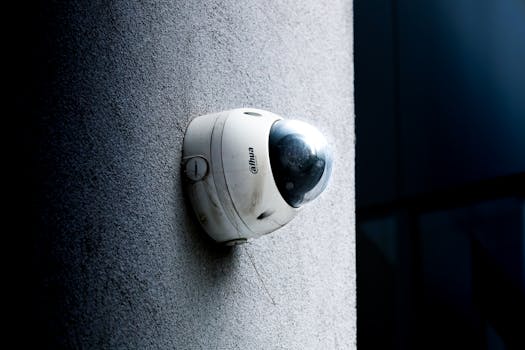
Surveillance footage has become one of the most influential forms of evidence in modern criminal cases. With cameras now present in public spaces, private businesses, residential neighborhoods, and even personal devices, video recordings frequently play a role in investigations long before formal charges are filed. While many people assume that video footage provides an objective and unquestionable account of events, the reality is far more nuanced.
Understanding how surveillance footage is collected, reviewed, interpreted, and presented within the criminal justice system reveals both its strengths and its limitations. Video evidence can clarify events, but it can also create misunderstandings when taken out of context or relied upon too heavily.
Surveillance footage generally refers to any video recording captured for monitoring or security purposes rather than for entertainment or personal documentation. In criminal cases, this can include footage from retail stores, restaurants, parking garages, apartment complexes, office buildings, banks, and gas stations. Increasingly, it also includes recordings from home security systems such as doorbell cameras, driveway cameras, and neighborhood monitoring networks.
Public-sector surveillance plays a role as well. Traffic cameras, cameras on public transportation, and municipal monitoring systems are often reviewed during investigations. In addition, police body-worn cameras and dash cameras may also become part of the evidentiary record, though separate policies and legal standards govern them.
Each type of surveillance footage is treated differently depending on who owns it, where it was recorded, and how it was obtained.
Video evidence is often perceived as more reliable than eyewitness testimony because it captures events as they occur. Unlike human memory, a recording does not forget details or change over time. Because of this perception, surveillance footage can strongly influence how investigators, prosecutors, jurors, and even judges view a case.
Footage may be used to establish timelines, show the sequence of events, or confirm whether certain actions occurred. It can also be used to support or contradict statements made by witnesses or suspects. However, despite its apparent objectivity, surveillance footage still requires interpretation and careful analysis.
When a crime is reported, investigators often begin by canvassing the surrounding area for cameras. This process may involve visiting nearby businesses, speaking with property managers, or requesting footage from homeowners. In many cases, footage is provided voluntarily, especially when owners believe it may help solve a crime.
In other situations, legal authorization may be required. If footage is stored in a private or restricted system, police may need a warrant or subpoena to obtain access. The legal method used to collect the footage can later affect whether it can be used in court.
Timing is also critical. Many surveillance systems overwrite recordings after a short period, sometimes within days. Delays in identifying and securing footage can result in lost or incomplete evidence.
Once obtained, surveillance footage is reviewed by investigators, sometimes repeatedly and frame by frame. Officers may look for identifying details such as clothing, body movements, physical characteristics, or vehicles. In some cases, footage from multiple cameras is combined to track movement across different locations.
Video analysis may also involve enhancing footage to improve clarity, adjusting lighting or contrast, or slowing playback to examine specific moments. While these techniques can be helpful, they can also introduce concerns about distortion or misinterpretation if not done carefully.
Surveillance footage is rarely used in isolation. Instead, it is typically combined with other evidence such as witness statements, physical evidence, digital records, or forensic findings. Video recordings may help establish probable cause, support the filing of charges, or shape the theory of the case.
In some situations, footage strengthens the prosecution’s narrative. In others, it may raise questions or highlight inconsistencies in witness accounts. There are also cases where video evidence supports the defense by contradicting allegations or showing that a suspect was not present at the scene.
Before surveillance footage can be shown in court, it must meet certain legal requirements. One of the most important is authentication. The party offering the footage must demonstrate that it is genuine, accurate, and has not been altered. This often involves testimony from someone familiar with the recording system or the process used to retrieve the footage.
Courts also consider relevance. Footage must relate directly to the issues in the case. Even if a video exists, it may be excluded if it is misleading, confusing, or more prejudicial than helpful.
Despite its usefulness, surveillance footage has significant limitations. Poor image quality is a common issue, particularly with older systems or cameras designed for wide coverage rather than detailed identification. Low resolution, poor lighting, weather conditions, or obstructions can all reduce clarity.
Camera angles may also distort perception. A fixed camera may fail to capture important details or may make distances and movements appear different than they actually were. In addition, many systems lack audio, leaving viewers without crucial context for what is happening on screen.
One of the most overlooked issues with surveillance footage is the risk of misinterpretation. Video clips often capture only a portion of an event. Without knowing what happened before or after the recording, viewers may draw inaccurate conclusions.
Human perception also plays a role. People tend to interpret footage based on expectations or assumptions, which can influence how actions are perceived. What appears aggressive or suspicious on video may have an innocent explanation that is not visible in the recording.
Surveillance systems are not always synchronized accurately. Incorrect timestamps, missing frames, or recording gaps can complicate efforts to establish timelines. These technical issues can become especially important when precise timing is critical to a case.
Storage and handling practices also matter. Improper copying, compression, or transfer of footage can degrade quality or raise questions about authenticity.
The use of surveillance footage intersects with privacy rights and constitutional protections. While individuals generally have limited expectations of privacy in public places, recordings made in private spaces or captured without consent can raise legal challenges.
Courts must balance the value of surveillance evidence against privacy protections, especially as technology continues to expand the reach and capabilities of recording systems.
As surveillance technology becomes more advanced and widespread, video evidence is playing an increasingly central role in criminal cases. Facial recognition, automated tracking, and networked camera systems are reshaping how investigations are conducted.
At the same time, these developments raise new legal and ethical questions about accuracy, bias, and oversight. The law continues to evolve as courts adapt to these technological changes.
Surveillance footage has transformed the criminal justice process, offering powerful visual evidence that can clarify events and influence outcomes. However, video recordings are not definitive proof on their own. Technical limitations, legal rules, and human interpretation shape them.
A clear understanding of how surveillance footage is obtained, analyzed, and used in criminal cases reveals why it must always be examined carefully and in context. Rather than providing absolute answers, video evidence is one part of a larger evidentiary framework that determines how criminal cases are resolved.